About
Our story
We came for one house
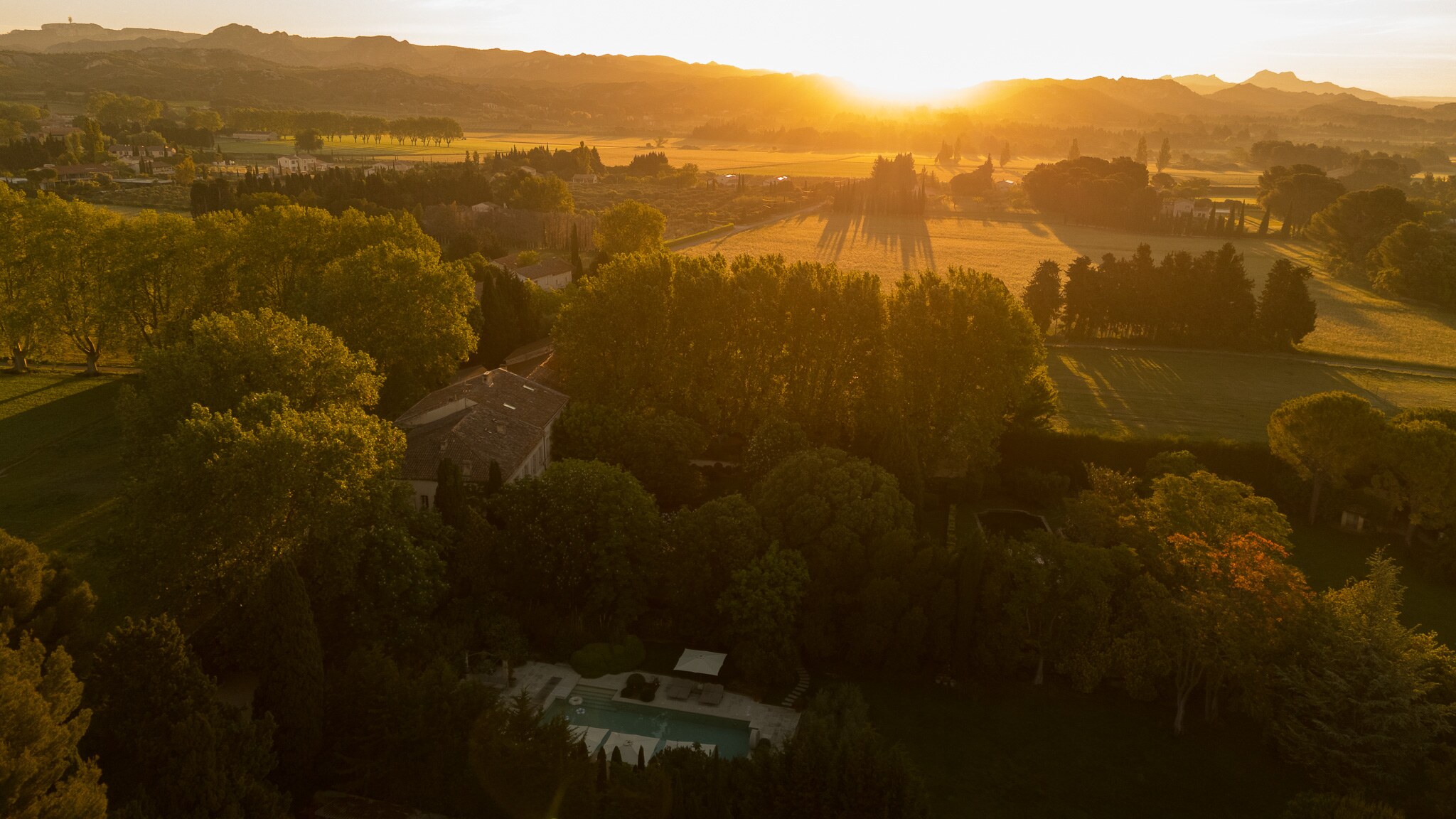
We came to the Alpilles for one house and never left. Eight houses later, the same people keep them, and each one is yours alone.
About the houses
Eight houses in the Alpilles, taken on one at a time.
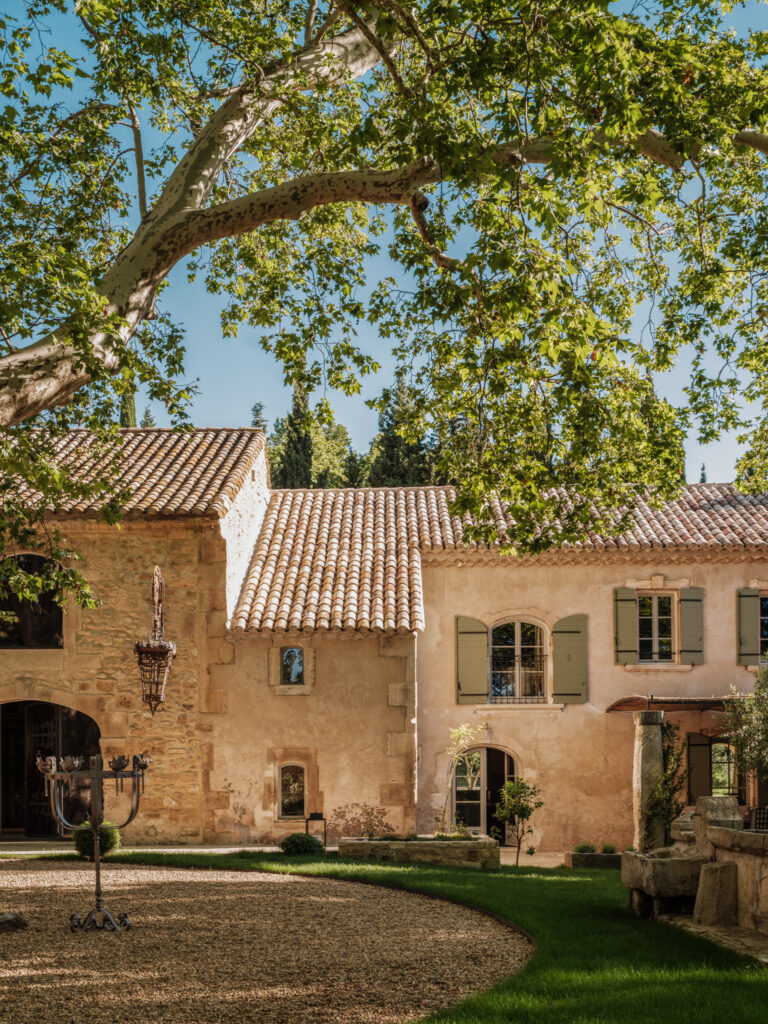
The land between Saint-Rémy-de-Provence and Les Baux-de-Provence has been worked for olives and sheep for centuries, and the houses on it were built for that work: an oil mill, a sheepfold, a village school, farms with thick walls and a well by the door. We went up and down these roads for years and kept stopping at the same gates: solid houses, built to last, and falling down all the same. Le Mas de Chabran was the first, opened to guests in 2019; six more followed.
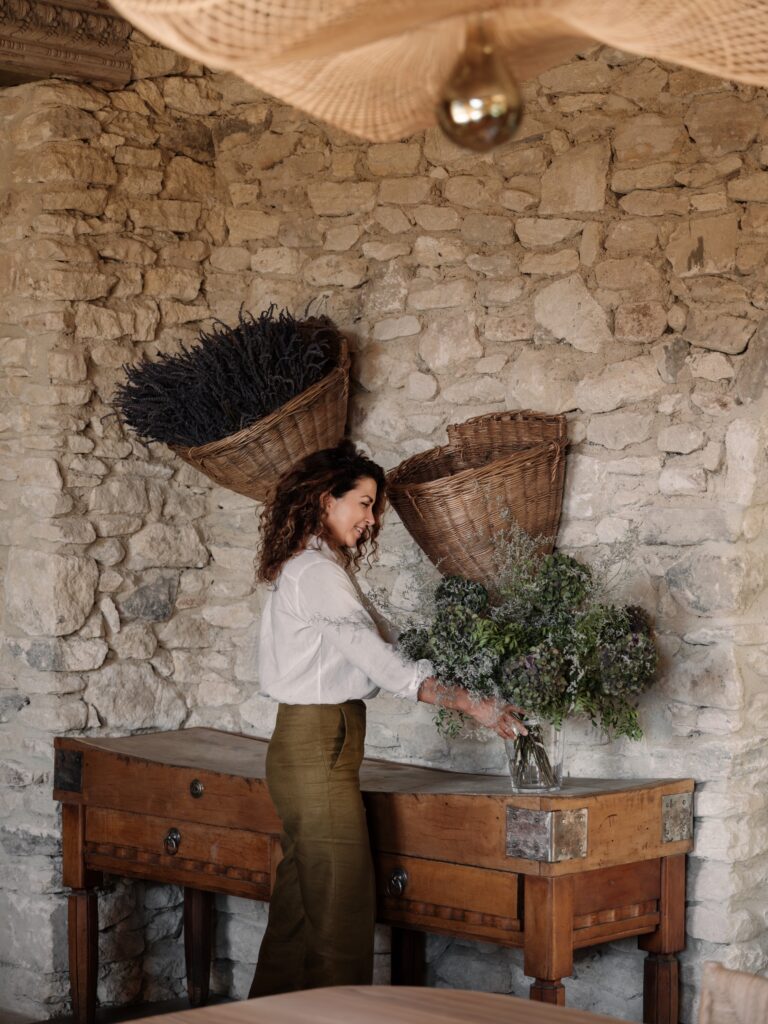
We take them on when they are close to being lost and put them back in the materials they were made of: lime, Les Baux limestone, old beams and terracotta, with the same masons and gardeners moving from one house to the next. Nothing is restored to a date. Each keeps its own name, its own house manager and its own table, and is open all year.
As featured in






We came to the Alpilles for one house. Alain had been designing and building fine houses in Geneva for thirty years; Liliana designed their interiors, from the proportions of a room to the details that matter. We went up and down these roads on foot, on horseback, by bicycle and by motorbike, and we kept stopping at the same gates: an old mill behind its plane trees, a sheepfold against a rock, a village house with its stable still standing. Solid houses, built to last, and falling down all the same.
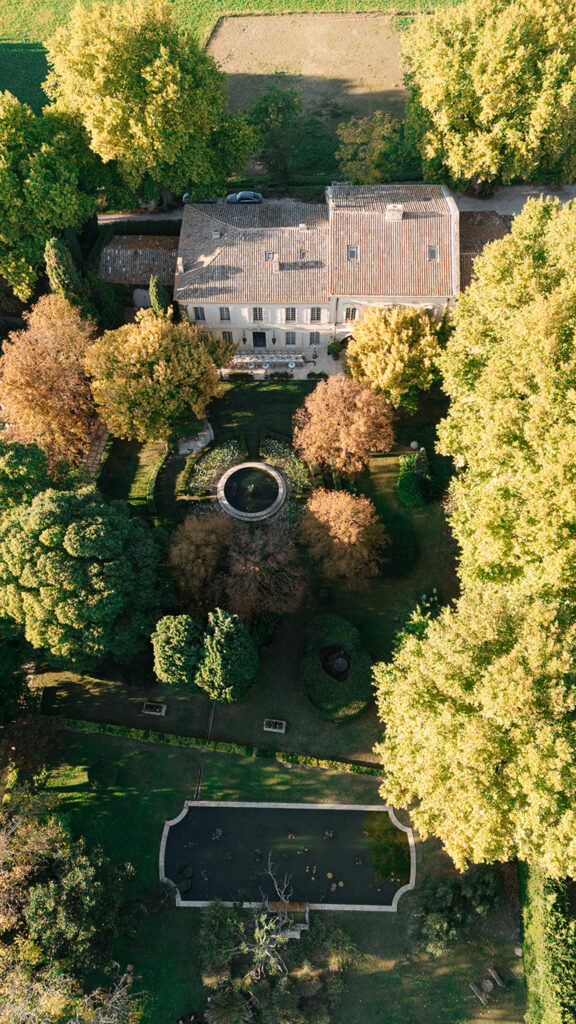
Le Mas de Chabran was the first. We had hoped to buy it for years, and when at last it was ours, it was a house asleep: whole parts of it we had not even explored, gardens that had almost gone back to the wild, and in the vaulted room where the oil was once kept, the date 1738 still cut into the stone. It was far too big for us. We asked ourselves what we would do with it, and the answer came on its own: open it, receive people here, and share with them what we love about France and about Provence. A year of work, day and night, and in 2019 the first guests arrived. We never left, and the masons who rebuilt it are the ones who rebuilt the houses that followed.
Reading the deeds, we found the houses already knew each other. The foreman of the Chabran mill before 1914 was called Fléchon, like the hamlet where our second house stands. A farming family of Mouriès owned both the village house that became Le Respelido and a house at Fléchon. Six of the eight stand in the old Terre des Baux; two look at the Alpilles from Eygalières. Without meaning to, we had put a family of houses back together.
The last to open its doors asked the most of us. When we first saw Mas Cagalou, about ten years ago, it was a ruin behind the pines, the Alpilles rising straight behind it: no roof, no windows, no reason to believe. We looked at each other and already knew. Then came years of waiting for a permit that might never come, and craftsmen we trusted with a house only we could see. One morning we walked through the finished door and understood: it had never been a ruin. It had only been waiting for someone to love it back.
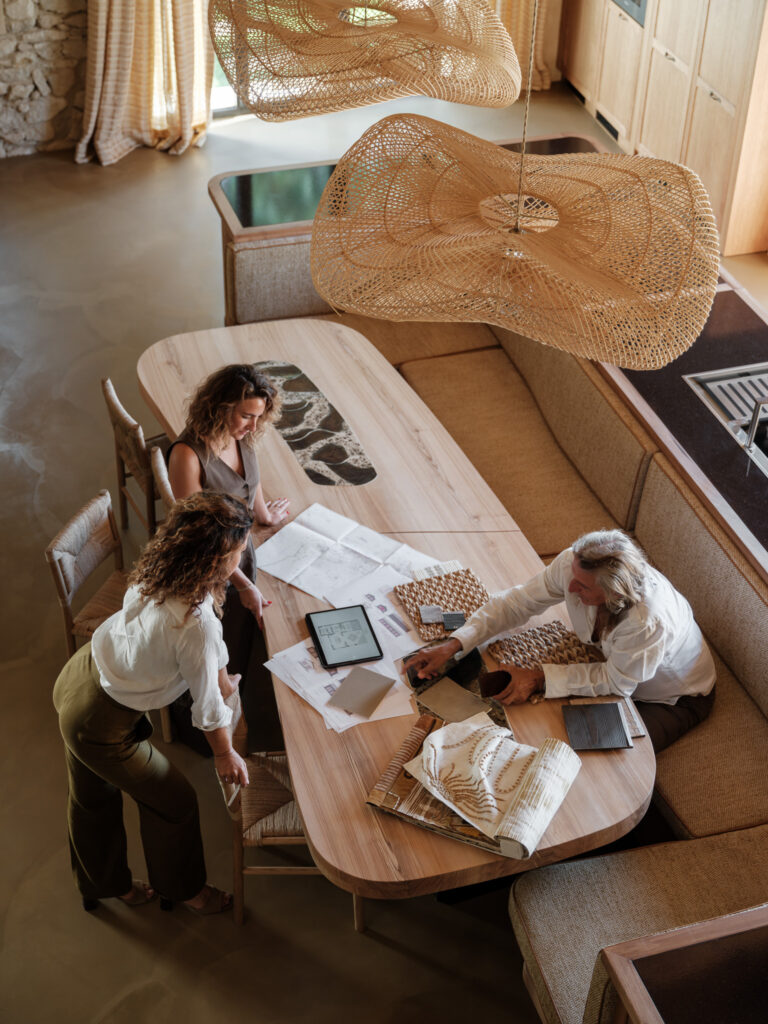
What we do with them is simple. We put each one back in the materials it was built from and add nothing it would not have had. Then we hand it over, whole, to one party at a time: a family, or friends who have known each other long enough to share a table for a week. Ven, Liliana’s sister, runs the houses and knows everyone for miles around. Quentin cooks what the market gives on Wednesday. The gardeners have been here longer than some of the trees.
Our hope is this: that you arrive and nobody asks you to sign anything; that by the third day you know the gardener’s name; and that you come back in a month no one thinks of, when the postcard is put away and the Alpilles are at their best.
— Alain and Liliana Meylan
The founders
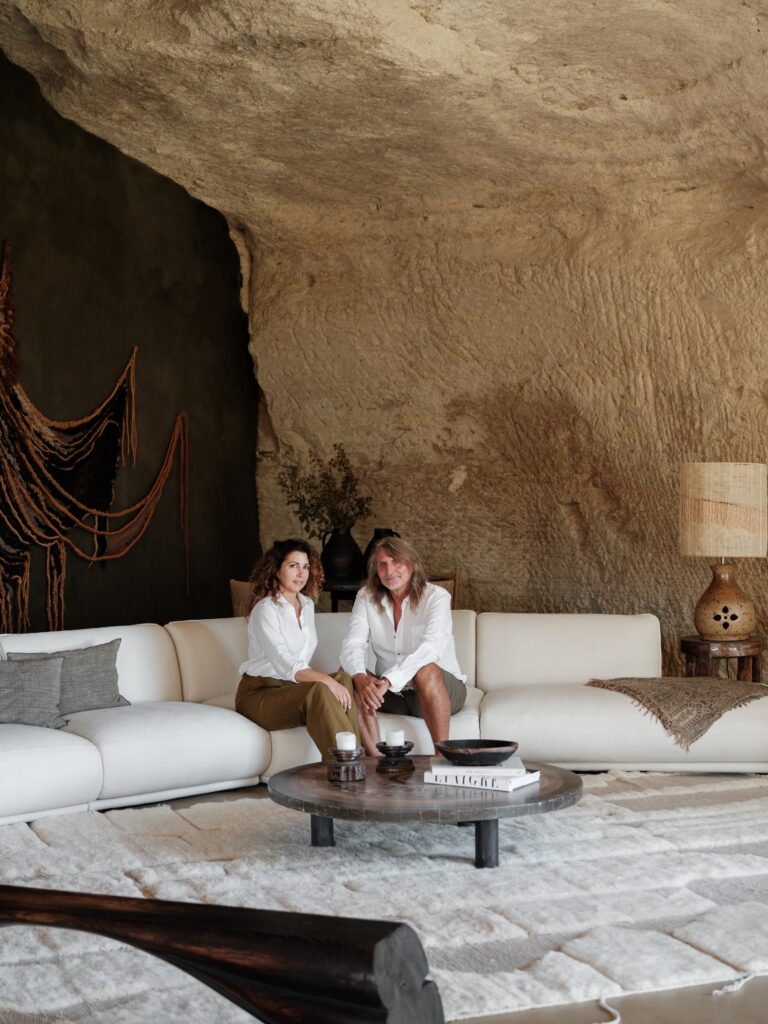
Alain and Liliana Meylan
Alain is an architect, Liliana an interior architect, and they decide everything together, from the first plan to the last object. They came to the Alpilles from Geneva, for one house.
They had hoped to buy Le Mas de Chabran for years, and when at last it was theirs, it was a house asleep, its gardens half gone wild, and far too big for two. So they opened it, and in 2019 the first guests arrived. They never left. A second house followed, then a third, and the plans became a way of living.
As if we were going to live there
We believe a house is nourished by its land, and that our job is to protect that heritage by making it part of our time. So we rebuild each one in the materials it was made from, with the craftsmen of the Alpilles, and we fill it with old furniture that becomes familiar, as if it had always been there: the curtains from Pierre Frey and Élitis, the antiques found on Sunday mornings in L’Isle-sur-la-Sorgue, the old doors brought back from India, the ceramics of a local potter. Now and then we ask an artist for a piece as big as the room. Nothing comes from a catalogue; everything was looked for, found and brought home.
Restorations
The houses, in the order they came
2019
Le Mas de Chabran
Maussane-les-Alpilles
A house of 1738, on a site recorded since 1563, bought asleep and far too big for us: the first house, opened after a year of work.
2019
La Bastide de Fléchon
Maussane-les-Alpilles
A square-shouldered house in the hamlet of Fléchon, found close to ruin and rebuilt in Les Baux limestone.
2024
Le Respelido
Mouriès
A farming family’s village house rebuilt around its walled garden, two minutes from the café on the square.
2025
Le Mas de Castillone
Paradou
The old school and town hall of the village, kept with the centuries-old plane tree you lunch under.
2025
La Santoline
Eygalières
A 19th-century mas in its two and a half hectares of olives, on the line of the old drovers’ road from Arles.
2026
La Bergerie de Calabrun
Les Baux-de-Provence
An abandoned sheepfold against the rock in the Val d’Enfer, never enlarged; Calabrun is the Provençal word for dusk.
2027
Mas Cagalou
Mouriès
An old farm in the heart of nature, with 1791 still cut into its vaults, protected and kept in its original volumes. The first guests arrive in 2027.